
The Affront That Built the Bluenose
- Canafete
- May 12
- 3 min read

In the autumn of 1920, Nova Scotia hosted a boat race: The International Fishermen's Cup.
The rules were simple. Competing vessels had to be working schooners that had completed an active fishing season on the North Atlantic grounds that year. They had to be crewed by fishermen. And the race would be sailed in whatever weather the North Atlantic chose to provide – no postponements, no exceptions. None of the polite accommodations made for wealthy yachtsmen at the America's Cup.
This was a race for real sailors. A showcase of maritime excellence among the working fleets of Nova Scotia and New England, run in a spirit of friendly competition between communities that had fished the same waters together for generations.
The inaugural race was held in Halifax Harbour. The schooner Esperanto, hailing from Gloucester, Massachusetts, won on November 1, 1920. And then Calvin Coolidge sent a telegram. 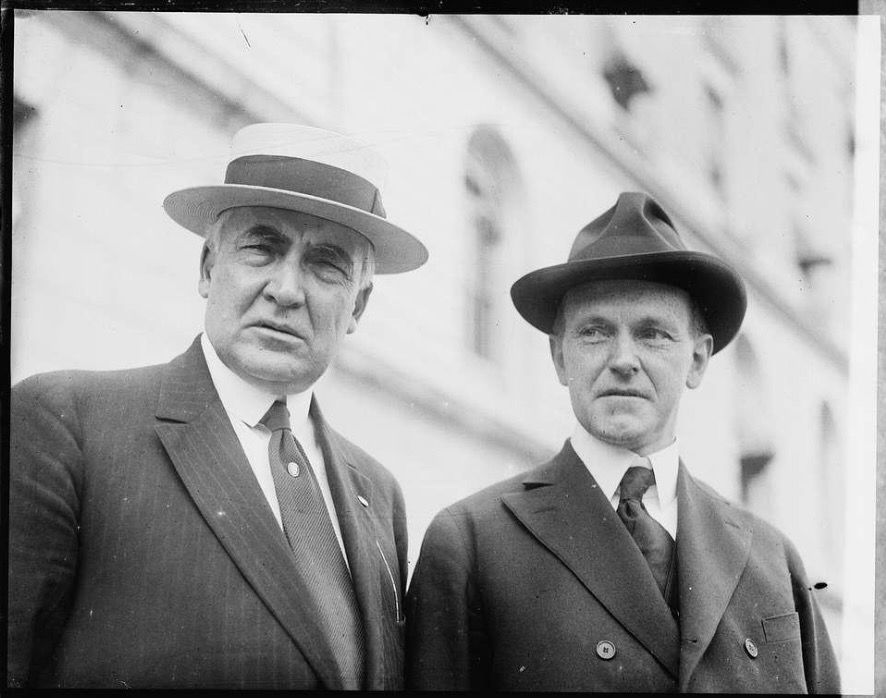 |  |
Coolidge was the Governor of Massachusetts, poised to become Vice President of the United States the following day. He and Presidential candidate Warren Harding had campaigned on a platform of "America First." Flush with political bravado, Coolidge sent his congratulations to the crew of the Esperanto, calling their victory a "Triumph of Americanism." Coolidge knew exactly what that statement carried: nativist pride, the assertion that American sailors were superior, that the North Atlantic belonged to America.
What is less clear is whether Coolidge gave a moment's thought to how that telegram would land in Halifax.
Nova Scotia had no reason to consider themselves lesser than their New England counterparts. The Canadian fishing fleet was among the best in the world, and Lunenburg's shipbuilding community held a centuries-long tradition of building and sailing vessels in conditions that demanded genuine mastery.
And yet, Nova Scotia had unknowingly entered a referendum on national superiority – a friendly competition that was retroactively declared a vindication of American greatness. The insult was not in the loss. It was in the discovery that Nova Scotia had come to a cordial race amongst peers and found, too late, that the other side had been playing an entirely different game.
Nova Scotia's response was not to dwell on the insult, or complain, or heaven forbid, accept it. By December 1920, Nova Scotia was already engineering a comeback – the Bluenose, the finest schooner ever built. The Bluenose launched in 1921. She won the International Fishermen's Trophy that year, and the next, and for seventeen years she did not lose to an American challenger. Whatever "Americanism" Coolidge had meant to invoke, Nova Scotia answered it with genuine superiority.
It would be tidy to say this is purely a story about 1920. But the shape of it is not entirely unfamiliar. The industries that define Canada today – steel, lumber, automotive plants, oil, and farms – are not so different in spirit from the fishing fleets and shipyards of 1920.
The story of 1920 does, however, provide a lesson on how to respond when someone mistakes your hospitality for weakness and insults your identity as inferior. Build a better boat.
© 2026 Canafete. The writing and original designs here are mine. You're welcome to share a short excerpt with credit and a link back to Canafete.ca. For anything more, including reprinting a full post, just ask: contact@canafete.ca
Further Reading:
McLaren, Keith. A Race for Real Sailors: The Bluenose and the International Fishermen's Cup, 1920–1938. Douglas & McIntyre, 2006.
The Canadian Encyclopedia. Search "Bluenose".
Maritime Museum of the Atlantic, Halifax. Search the Bluenose collection.
Nova Scotia Archives. Search "Bluenose".
Gloucester Daily Times, November 1920 issues. Digitized copies available through the Sawyer Free Library, Gloucester Massachusetts.
(1) Photograph courtesy of the Library of Congress, National Photo Company Collection, Prints and Photographs Division. Public domain.
(2) Photograph courtesy of the Sawyer Free Library digitized archive, Gloucester, Massachusetts. Public domain.
